
Articles & Personal Blogs
Are Hidden Disability car parking bays really that difficult?
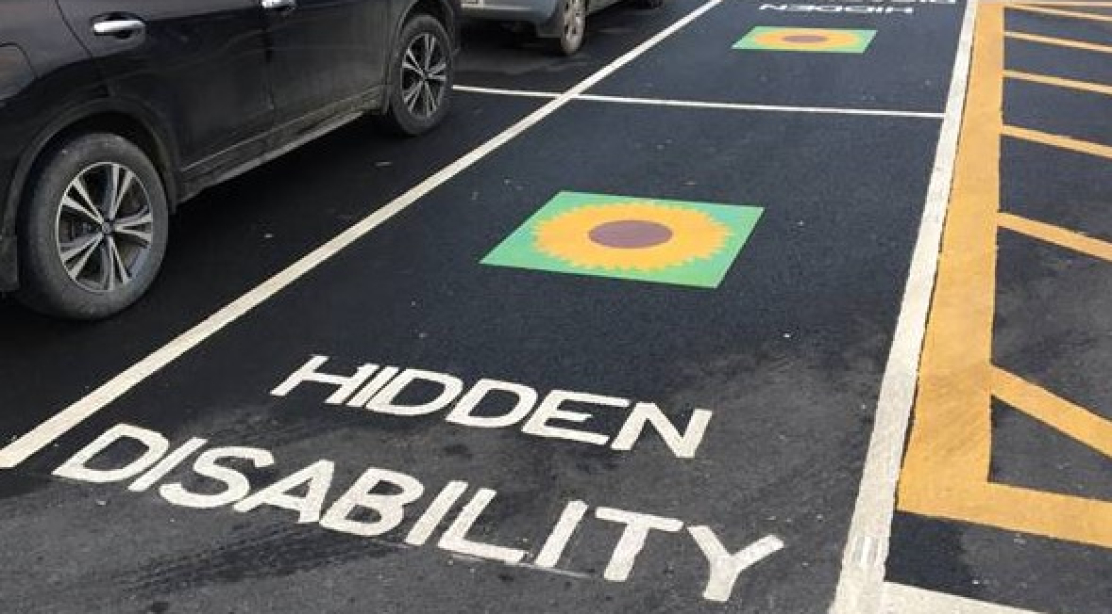
Fingal County Council & Ignorance to Hidden Disability Car Parking
For six years, I have been battling with local councillors and advocating for the installation of hidden disability car parking spaces in the Fingal area. Despite securing an agreement back in 2021 from Fingal County Council to pilot these spaces, that promise has never materialised.
As I highlighted in a recent proposal and letter to the council, my pre-verbal, 8 year old son is autistic and a "flight-risk," meaning he has no awareness of danger. Navigating busy car parks with limited access to nearby playgrounds is a massive hazard for our family, particularly when we also need extra space to safely get our assistance dog out of the car.
Just last Saturday, the glaring hypocrisy of the council’s excuses was on full display at Ardgillan Castle. An event was taking place, which resulted in the lower car park which is designated for over 70's and disabled (Blue Badge) holders being completely overrun. Meanwhile, the upper car park sat completely empty.
Given the layout and access to amenities, the lower car park makes far more sense to be designated for parents of children with additional needs. Yet, I watched as several non-Blue Badge holders casually parked in the disabled bays. When I brought this blatant misuse to the park warden's attention, he told me I would have to report the illegal parking to the local council (Fingal). So, I called their number, only to be told that absolutely nothing could be done because it was "out of hours."
Yet, time and time again, Fingal County Council’s response to these very real safety concerns is to tell parents of children with additional needs to simply apply for a "Blue Badge". This response is not only dismissive, but it highlights a complete lack of education within the council's operations department regarding the realities of hidden disabilities.
Blue Badges are strictly for individuals with severe restricted mobility or those who are certified blind.
The qualifying criteria focus entirely on an applicant's physical mobility, explicitly noting that individuals with intellectual or behavioural conditions whose mobility is not severely restricted do not qualify. Telling a family with an autistic child to get a Blue Badge is nothing but a bureaucratic dead end.
When pushed on this issue, council staff have argued that hidden disability spaces would be "open to misuse" and, in the absence of statutory authority, cannot be effectively enforced. They use "governance" as a convenient shield to avoid taking action. But this begs an obvious question:
Why won't Fingal County Council alter their by-laws to accommodate the most vulnerable members of our community?
It is deeply frustrating to be told that hidden disability spaces can't be implemented because they "cannot be effectively enforced," when the incident at Ardgillan Castle clearly proves the council cannot even govern or enforce the existing statutory disabled bays on a weekend.
Other Councils can do it?
The reality is that the "governance" excuse falls completely flat when you look at what other local authorities are doing across the country. Waterford County Council led the way by being the first to introduce these spaces in Dungarvan. Wicklow County Council successfully installed them in Bray and Arklow. Kilkenny and Meath have also embraced the initiative.
These councils don't rely on strict legislative enforcement; instead, they utilise the globally recognised Hidden Disabilities Sunflower scheme. A simple Sunflower badge or a bright yellow sunflower painted on a green parking space acts as a discreet sign that the user has a hidden disability and genuinely needs that space. As other councils have noted, while the initiative relies on public goodwill, respect, and compassion, it has been an absolute "game-changer" for parents of autistic children.
Furthermore, the logistics of setting up and governing these spaces have already been solved by organisations like ASD Ireland. They successfully operate a permit system for autism-friendly parking in various locations including Limerick simply by issuing specific stickers to be placed on car windscreens to prevent clamping. At one point, Keith Enright, the CEO of ASD Ireland, even reached out with an offer to work with Fingal, explicitly stating they would provide the necessary signage completely free of charge if the council would just approve the installation.
So, what is stopping Fingal County Council? It is not a lack of resources, a lack of practical solutions, or a lack of precedent from other Irish councils. After six years of going in circles, the reality is stark:
There is no excuse, just ignorance.
You May Also Like



Delivering the
latest insights
on AV & Tech