
Articles & Personal Blogs
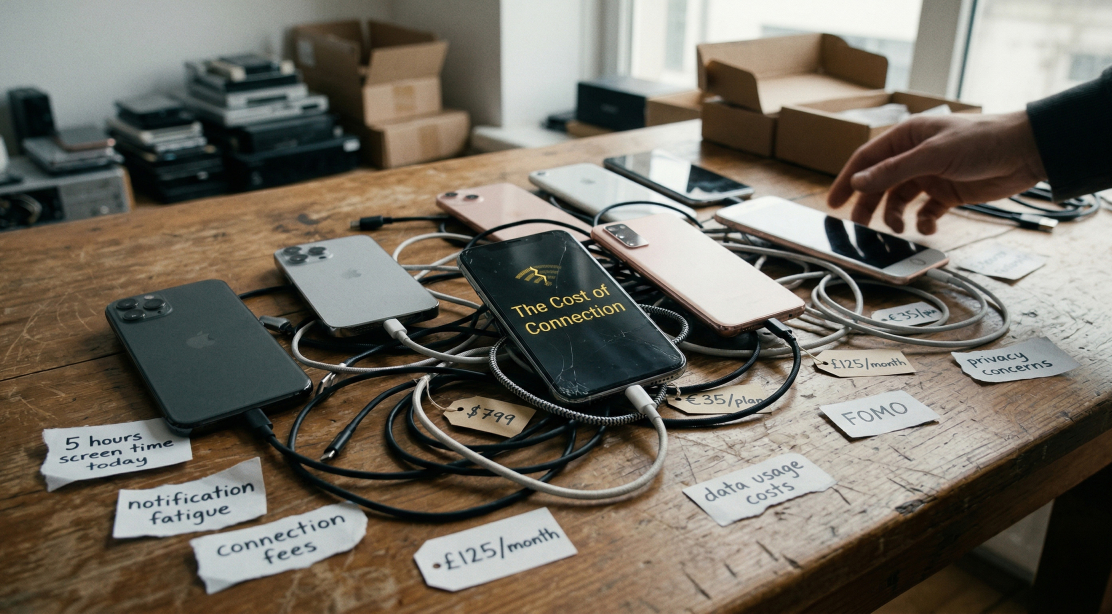
The Rising Cost of Connection
The Rising Cost of Connection
We are living in an era where the average smartphone can cost more than some families earn in an entire month. Seeing a price tag of €1,000 or more on a new flagship device has become alarmingly common, and it forces us to confront an uncomfortable reality. As these pocket-sized computers become increasingly expensive, we have to ask ourselves: Is it truly worth it? And more importantly, are we sleepwalking into a financial trap by paying off these devices through hugely inflated monthly tariffs?
The Hidden Forces Driving Up Prices
If you feel like smartphones are getting disproportionately expensive, you aren't imagining things. The smartphone industry in 2026 is facing unprecedented cost pressures, largely driven by the explosive growth of Artificial Intelligence. Smartphones are now directly competing with massive AI data centres for crucial memory components, specifically DRAM and NAND.
This bottleneck in the supply chain has caused global memory prices to surge by as much as 500%. Carl Pei, the CEO of the smartphone brand Nothing, recently highlighted that memory modules which cost less than $20 a year ago could exceed $100 by the end of the year. The production cost of entry-level phones has spiked by 20-30%, while mid-range and premium devices are seeing cost increases of 10-15%. Analysts now expect the average selling price of smartphones to rise by nearly 7%.
To cope with these soaring expenses, manufacturers are facing difficult choices. Some are releasing devices with notable compromises, like Apple's $599 iPhone 17e, which lacks a second camera. Other brands are quietly introducing "ghost downgrades"—using older storage standards or slightly slower, "binned" chips to save on manufacturing costs. You could very well be paying more money for older technology.
The Tariff Trap and the True Cost of Connection
Faced with €1,000+ retail prices, most people cannot afford to buy a phone outright. Instead, consumers are increasingly lured into signing lengthy contracts with hugely inflated monthly tariffs. We end up treating a smartphone like a high-interest mortgage, trapped in a cycle of paying a massive premium spread over several years for a device that might be obsolete before the final payment is even made.
But the financial strain is only one part of the equation. There is also a profound psychological cost to this constant connection. We are going into debt to carry devices engineered to maximize our addiction. Extensive research has shown that excessive screen time impairs our executive functioning—our ability to plan, organise, and solve problems. For children and teenagers, early smartphone ownership strongly correlates with higher risks of anxiety, depression, and lower self-worth. We are paying top dollar for digital distraction that takes us up to 20 minutes to refocus from.
A Smarter Way Forward
So, how do we break free from the rising cost of connection? If you absolutely need a modern smartphone, the smartest move isn't necessarily buying the cheapest handset on the shelf, but calculating the "cost per year" of safe ownership.
Instead of getting trapped in a cycle of upgrading every two years on an inflated tariff, look for devices with long-term software support. For example, a premium £850 flagship phone from Google or Samsung that comes with seven years of security updates effectively costs about £121 per year. This is actually a much smarter financial investment than buying a £280 budget phone that only offers two years of updates, which breaks down to £140 per year. By holding onto a high-quality phone for five to seven years, you bypass the cycle of continuous debt.
Alternatively, you can join the growing counter-movement of intentional technology. A new wave of minimalist "dumbphones"—like the Light Phone III, the Mudita Kompakt, or even the $50 Nokia 2780 Flip—is prioritising essential communication without the trap of the infinite scroll.
Technology at its best should amplify human potential; at its worst, it substitutes for it. Before we blindly sign another contract for a €1,000 device, we need to ask ourselves if we are paying for genuine innovation, or simply funding a supply chain crisis while sacrificing our own well-being.
Sometimes, simpler isn't just different—it is essential.
Justin Dawson is a multi-award winning AV Professional and Tech Influencer. Find more of his writings at www.SirJustinDawson.com
You May Also Like
Delivering the
latest insights
on AV & Tech